





Which SUV tows more confidently for weekend trips around Janesville, WI — the 2026 Jeep Grand Cherokee or the 2026 Honda Passport?
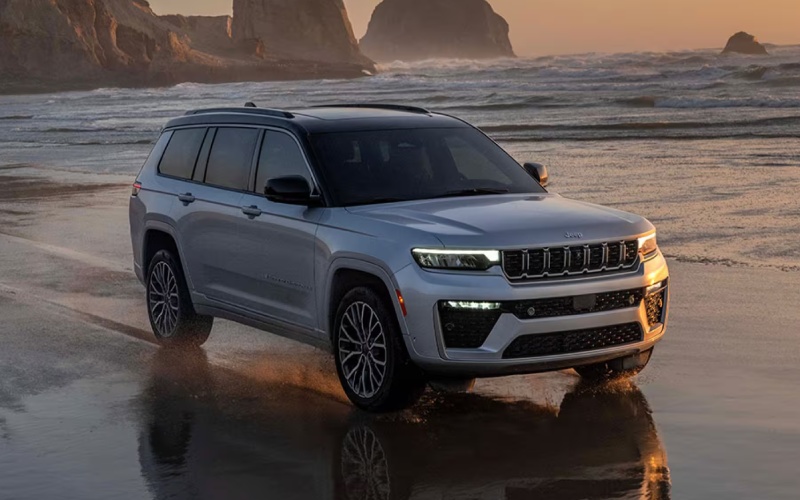
Russ Darrow Jeep of Madison – Which SUV tows more confidently for weekend trips around Janesville, WI — the 2026 Jeep Grand Cherokee or the 2026 Honda Passport?
When towing is part of the plan — boats to Lakes Mendota and Waubesa, small campers toward the Driftless, utility trailers for home projects — the same question comes up over and over: which SUV offers more confident pulling power for local use around Janesville, WI? Here is a clear, practical look at the 2026 Jeep® Grand Cherokee and the 2026 Honda Passport, focusing on tow ratings, stability hardware, and the driver-assist tech that eases the miles before you ever back down a ramp or settle into a campsite.
Tow ratings and what they mean on your Saturday morning
On paper, the 2026 Jeep® Grand Cherokee leads with a manufacturer-listed maximum towing capacity of up to 6,200 pounds when properly equipped. That extra headroom matters if your trailer mix includes a 20-foot fiberglass fishing boat, a mid-size pop-up camper, or a pair of ATVs on a robust steel trailer with a loaded gear bin. The 2026 Honda Passport is rated up to 5,000 pounds when properly equipped, which handles plenty of tasks — think aluminum fishing rigs, smaller campers, and single-axle utility loads — but leaves less margin once you account for gear and fluids.
Beyond the number, a higher tow rating often correlates with more robust cooling, gearing, and chassis tuning. The Grand Cherokee’s new Gen IV transmission and available 4×4 systems built for traction and control help translate paper capability into a confident real-world experience on the rolling grades along I-39/90 or County M toward the Rock River.
Hardware that keeps your rig composed
Towing isn’t just about pulling; it’s about composure when pavement ripples or crosswinds kick up south of town. The Jeep® hardware catalog is deep: three available 4×4 systems (Quadra-Trac I®, Quadra-Trac II®, and Quadra-Drive® II with a rear electronic limited-slip differential) balance traction side-to-side and front-to-rear. Available Quadra-Lift® Air Suspension can lower the vehicle for stability at speed, and raise for clearance when a lakeside access road turns rutted. The Passport answers with its second-generation i?VTM4® AWD system and available off-road-tuned suspension, a combo that helps find grip on wet ramps and gravel pullouts. It’s a solid approach; the Jeep® simply gives you more ways to configure the vehicle around your specific trailer and usual routes.
Trailering tech you’ll actually use
Driver-assist and visibility tools make a towing day go smoothly. The 2026 Grand Cherokee offers a 360º Surround View Camera to help with hitch alignment and tight maneuvering, and an available Digital Rearview Mirror that can show real-time camera video when cargo or a trailer tongue blocks the conventional mirror’s view. The available 10-inch Head-Up Display keeps speed and navigation cues in your line of sight on unfamiliar backroads. The Passport’s TrailWatch™ camera system is great for off-road perspective and low-speed awareness near obstacles, and Honda Sensing® adds the modern ADAS features you expect. For long highway stretches, the Jeep’s available Hands-Free Active Driving Assist on compatible roads adds comfort while maintaining driver attentiveness — a helpful layer on the way home when daylight fades.
Powertrains and the feel from the driver’s seat
The Grand Cherokee brings the new 2.0L Hurricane 4 Turbo that’s designed to pair high-output torque with a refined, efficient drive, plus the available 4xe plug-in hybrid powertrain for electric-assisted towing around town. The Passport’s updated V6 is its most powerful yet and carries an established reputation for smoothness. From the driver’s seat, what you notice with the Jeep® is the broad torque spread and composure through the transmission’s ratios — the kind of response that helps you merge cleanly from frontage roads near Milton Avenue or keep momentum up the climb west toward the farm fields.
Practical packing — passenger space and cargo
If you’re towing on a summer weekend, the vehicle still has to carry people and stuff. The Grand Cherokee’s two-row models already offer generous cargo room, and the Grand Cherokee L option adds a third row and multiple folding configurations. That flexibility means coolers, tackle boxes, and duffels can ride inside while still keeping grandparents or extra friends comfortable. The Passport remains a two-row SUV with a usefully wide cargo area; it fits the basics well, but the Jeep® gives you more layouts when the crew count grows or weather pushes gear inside.
Key differences at a glance
- Towing headroom: Grand Cherokee up to 6,200 lbs when properly equipped vs. Passport up to 5,000 lbs when properly equipped.
- 4×4 flexibility: Jeep® offers three available systems, including Quadra-Drive® II with a rear eLSD; Passport features i?VTM4® AWD.
- Suspension options: Available Quadra-Lift® Air Suspension on Jeep®; off-road-tuned suspension available on Passport.
- Visibility and assist tech: Jeep® available 360º camera, Digital Rearview Mirror, Head-Up Display, and Hands-Free Active Driving Assist; Passport TrailWatch™ and Honda Sensing® standard suite.
- Cabin flexibility: Jeep® offers two- and three-row body styles; Passport is two-row only.
How to decide for your driveway
Start with your heaviest realistic trailer weight, then add the stuff that sneaks up on you — coolers with ice, a full fuel tank for the boat, the bin of life jackets you always pack. If that total nudges above 4,500 pounds, the Jeep® Grand Cherokee’s 6,200-pound rating creates welcome margin. If your trailers are lighter and you prize a simple, rugged two-row design, the Passport remains a capable option. Many shoppers also notice the Grand Cherokee’s broader mix of trims and powertrains — including the plug-in hybrid 4xe — which makes it easier to tailor the ownership experience for weekday commutes and weekend play.
Frequently Asked Questions:
Can both SUVs handle a family boat?
Yes. The Passport covers many 16- to 18-foot aluminum fishing boats and smaller fiberglass rigs. The Grand Cherokee’s higher rating adds margin for larger fiberglass boats and more gear onboard.
Do I need a weight-distributing hitch?
Check your trailer’s tongue weight and your vehicle’s owner’s manual. As total weight and tongue weight increase, a properly set weight-distributing hitch can improve stability and braking feel.
Which one is easier to park with a trailer?
Both offer helpful cameras. The Jeep’s available 360º Surround View Camera and Digital Rearview Mirror provide an edge when sightlines are blocked by cargo or a trailer tongue, especially in tight lots around busy trailheads.
Bottom line: for drivers who tow a wider variety of loads or want more technology that directly supports towing, the Jeep® Grand Cherokee is the confident pick. If your trailers sit well within 5,000 pounds and you prefer a straightforward two-row layout, the Passport remains a solid alternative. For side-by-side test drives and guidance on setup — from hitch selection to brake controller questions — visit Russ Darrow Chrysler Dodge Jeep RAM of Madison, proudly serving Janesville, Fitchburg, and Stoughton.
0 comment(s) so far on Which SUV tows more confidently for weekend trips around Janesville, WI — the 2026 Jeep Grand Cherokee or the 2026 Honda Passport?