





Which compact SUV has smarter all-weather tech for Stoughton, WI drivers — 2026 Jeep Compass or 2026 Subaru Forester?
Russ Darrow Jeep of Madison – Which compact SUV has smarter all-weather tech for Stoughton, WI drivers — 2026 Jeep Compass or 2026 Subaru Forester?
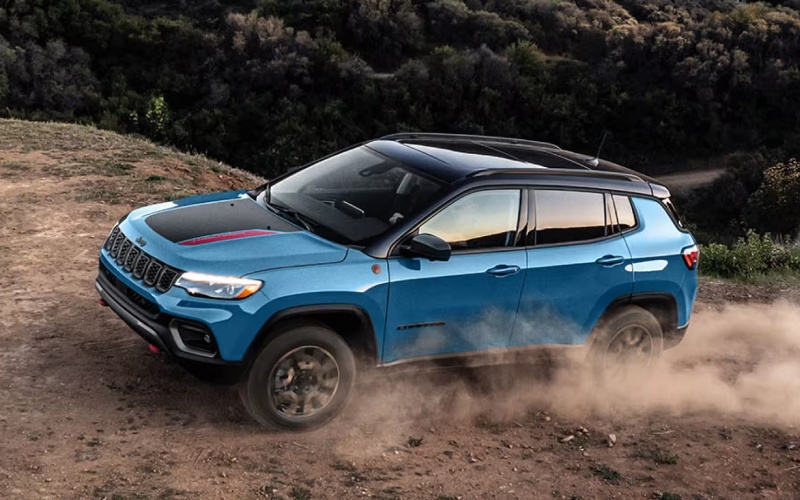
When shoppers around Stoughton, WI ask which compact SUV handles unpredictable Midwest weather with more composure—the 2026 Jeep® Compass or the 2026 Subaru Forester—we start with traction systems and the powertrains that feed them. Both SUVs deliver confident all-wheel traction, but they do it differently. Compass equips every model with Jeep® Active Drive 4×4, and Trailhawk® adds Jeep Active Drive Low with a 20:1 crawl ratio and Rock Mode via Selec-Terrain®. Forester brings standard Symmetrical All-Wheel Drive and offers X-MODE® or dual-function X-MODE on higher trims with Snow/Dirt and Deep Snow/Mud settings. On paper, both look ready for slush and shoulder-season ice. In practice, Compass’s low-range hardware and turbo torque give it a sturdier, more relaxed feel when you’re easing up an unplowed driveway or pulling away on a greasy side street after freezing rain.
Power is the second big difference. Compass features a standard 2.0L turbo I-4 with Best-in-Class standard 200 horsepower and 221 lb-ft of torque, routed through an 8-speed automatic tuned for smooth takeoffs and confident passing. Forester’s 2.5-liter SUBARU BOXER® engine makes 180 hp and 178 lb-ft through a Lineartronic® CVT. On a cold morning with kids, backpacks, and a full cargo area, that early turbo torque in the Compass helps avoid engine strain and reduces the need to dig deep into the throttle—useful when surfaces are slick and you want measured inputs rather than big revs. It’s the kind of difference you appreciate day after day, not only on the worst days.
Traction tech that matters when roads are messy
Modern traction management isn’t just a buzzword; it’s software and hardware that help average drivers feel poised in below-average conditions. Here’s how the two systems align for Stoughton-area driving:
- Mode logic: Compass Selec-Terrain® offers Auto, Snow, Sand, and Mud modes on all models, plus Rock on Trailhawk® for boulder-strewn or deeply rutted paths; Forester’s dual-function X-MODE adds Snow/Dirt and Deep Snow/Mud on select trims.
- Low-speed control: Compass Trailhawk® uses Jeep Active Drive Low with a 20:1 crawl ratio and Hill Descent Control for stable, controlled progress on steep or uneven grades; Forester offers Hill Descent Control but no low-range equivalent.
- Tires for conditions: Compass Trailhawk® fits Falken® WILDPEAK® All-Terrain Tires from the factory; Forester Wilderness wears Yokohama GEOLANDAR® A/T tires, a good pairing for unpaved trailheads and trailering.
Both SUVs inspire confidence, yet the Compass brings a deeper toolbox for those one-in-five days when your street isn’t yet plowed or a gravel drive turns to deep ruts. And because that capability is backed by genuine Trail Rated® testing, it isn’t just traction by algorithm—it’s traction that’s been validated on the ground.
Safety and visibility during winter commutes
Safety tech can be just as important as traction when snow refreezes at dusk. The Compass offers available Active Driving Assist for gentle lane-centering support and distance keeping on highway stretches, plus Drowsy Driver Detection and available rain-sensing wipers with a windshield wiper de-icer. Forester counters with standard EyeSight® Driver Assist Technology on every trim, available Automatic Emergency Steering, and a Touring-only Surround View Monitor. Both lineups help reduce fatigue and expand your awareness. If you often leave before sunrise or get back after dark, small features like the Compass’s wiper de-icer reduce ice build-up and preserve visibility, which makes any advanced safety system more effective.
Powertrains and towing through the seasons
Beyond slippery streets, all-weather ownership includes towing small loads, running errands with the cargo area full, and making time-sensitive merges onto main arteries. The Compass’s standard 2,000-lb towing capacity across the lineup is a subtle yet real advantage when you’re pulling a small utility trailer or a pair of snow machines. Forester’s standard tow capacity is 1,500 lb, though the Wilderness trim is rated up to 3,500 lb for owners who prioritize occasional heavier towing over day-to-day responsiveness. Choose the use case you’ll encounter most often—if it’s everyday composure plus 4×4 capability you can feel, the Jeep® setup is compelling.
Daily livability and winter-friendly amenities
Cold-weather comfort also influences confidence. The Compass lineup includes standard heated front seats and a heated steering wheel, with available Dual-Pane Sunroof, 10.1-inch Uconnect® 5 touchscreen, and an available 10.25-inch Digital Cluster. Forester offers heated front seats on most trims, a panoramic power moonroof on many models, and an 11.6-inch multimedia system with wireless Apple CarPlay® and Android Auto™ on upper trims. Both are well-equipped, but the Compass’s mix of heated features and its polished digital cluster amplify visibility and comfort when you least feel like fumbling with buttons and menus—like the first truly icy morning of the season.
Frequently Asked Questions:
Which SUV has better all-weather traction overall?
Both have excellent systems. Compass stands out with Jeep Active Drive Low and Rock Mode on Trailhawk® for deep ruts and uneven surfaces. Forester excels with Symmetrical AWD and dual-function X-MODE on higher trims. If you want low-range control and a Trail Rated® pedigree, Compass holds the edge.
Is the Subaru Forester more spacious?
Yes. Forester offers more passenger volume and maximum cargo room. The Compass counters with smart space usage, an available hands-free power liftgate, and a fold-flat front passenger seat on select trims for long items.
Which feels more confident on cold starts and busy merges?
The Compass’s turbo torque and 8-speed automatic deliver stronger initial response for quick merges and less strain when loaded. Forester’s naturally aspirated engine and CVT are smooth, but the Jeep® powertrain feels more relaxed and ready with a full crew on board.
Still deciding? Stop by for a side-by-side drive. Our team at Russ Darrow Chrysler Dodge Jeep RAM of Madison—serving Janesville, Fitchburg, and Stoughton—can set up a route that covers neighborhood streets, higher-speed merges, and some less-than-perfect pavement so you can feel how each SUV responds when traction is at a premium.
Bottom line: If your priority is deep capability backed by a turbocharged powertrain and a traction system that includes a true low-range function, the 2026 Jeep Compass answers with confidence. If you value a roomier interior and a long-running reputation for all-weather poise, the 2026 Subaru Forester remains an appealing choice. For Stoughton, WI drivers who want capability you can sense immediately—on snowpack, slush, or muddy shoulders—the Compass tends to feel more settled, more ready, and more reassuring.
0 comment(s) so far on Which compact SUV has smarter all-weather tech for Stoughton, WI drivers — 2026 Jeep Compass or 2026 Subaru Forester?